StandAid
Fall 2020
ME 2160 Introduction to Mechanical Engineering Design
Problem
- Rising from a chair is a basic requirement of maintaining an independent lifestyle. As people age, this simple task becomes more and more difficult.
- Over 6% of community dwelling elderly residents (defined as older adults capable of living by themselves) and over 60% of nursing home residents have trouble with the sit-to-stand transition.
- This problem is largely due to muscle deterioration as people age, a problem that is made worse by an inability to stand.
- The inability for older adults to transition from the seated position to the standing position has severely limited their mobility and independence.
- Problems with sit-to-stand transitions were responsible for 41% of all falls in nursing homes in 2014.
- An assistive chair focused on helping older adults with sit to stand transitions would address a growing need for millions of people worldwide.
Solution
- The goal of the StandAid project is to design a chair to assist elderly people in the act of standing up.
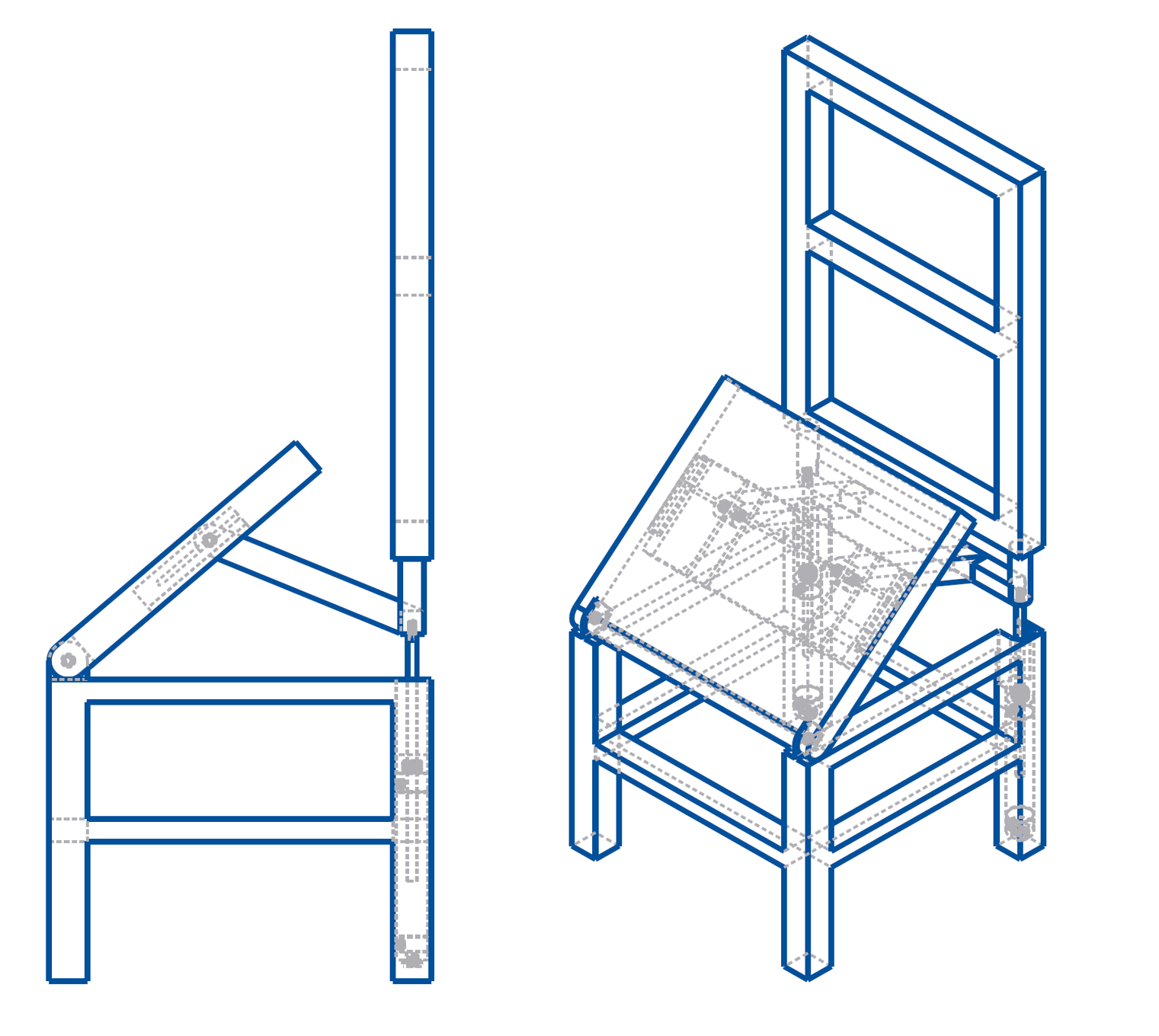
- StandAid will be able to comfortably support the weight of an elderly person in the seated position, but also will be able to help them up into the upright standing position in a safe, reliable, and ergonomic manner.
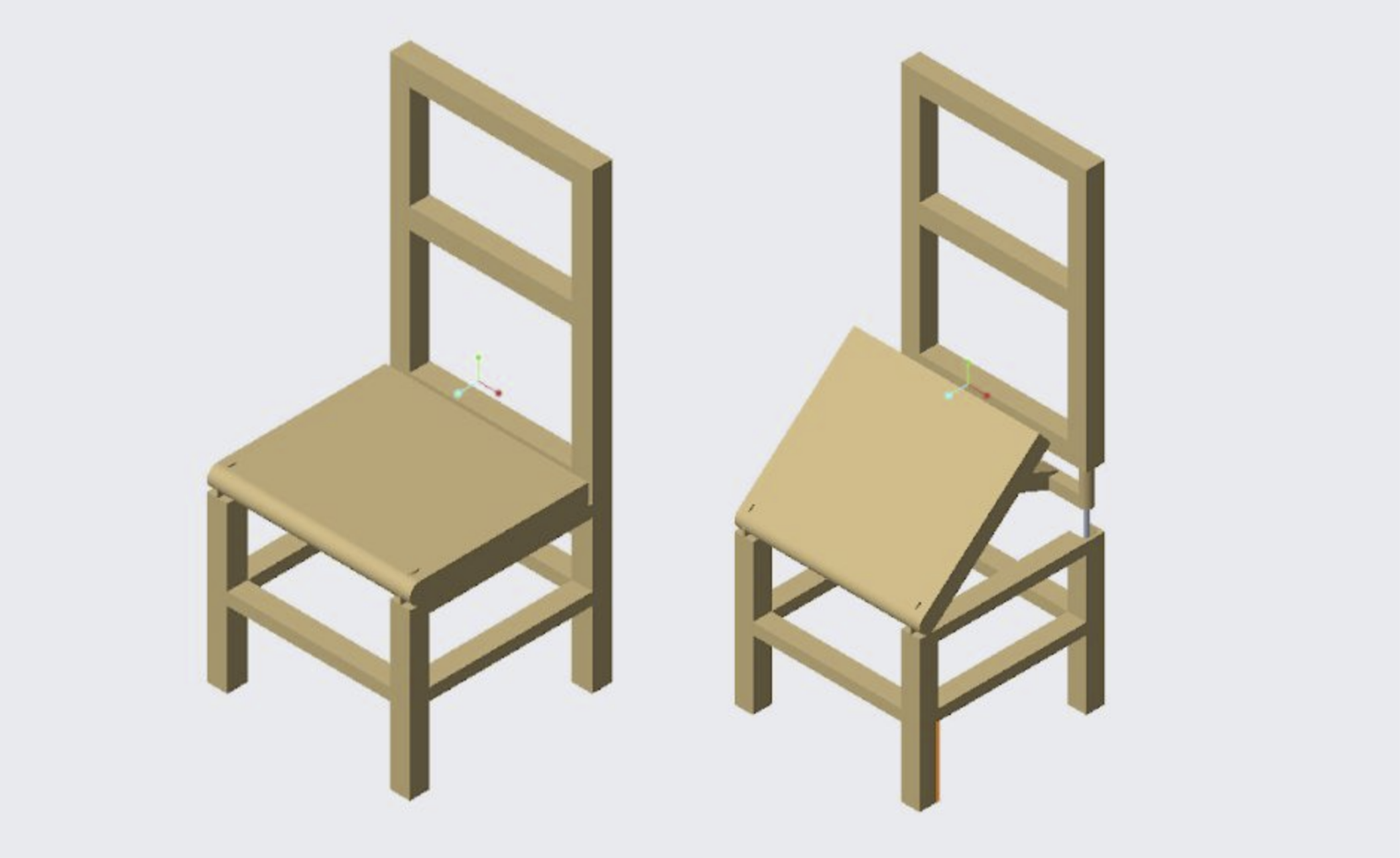
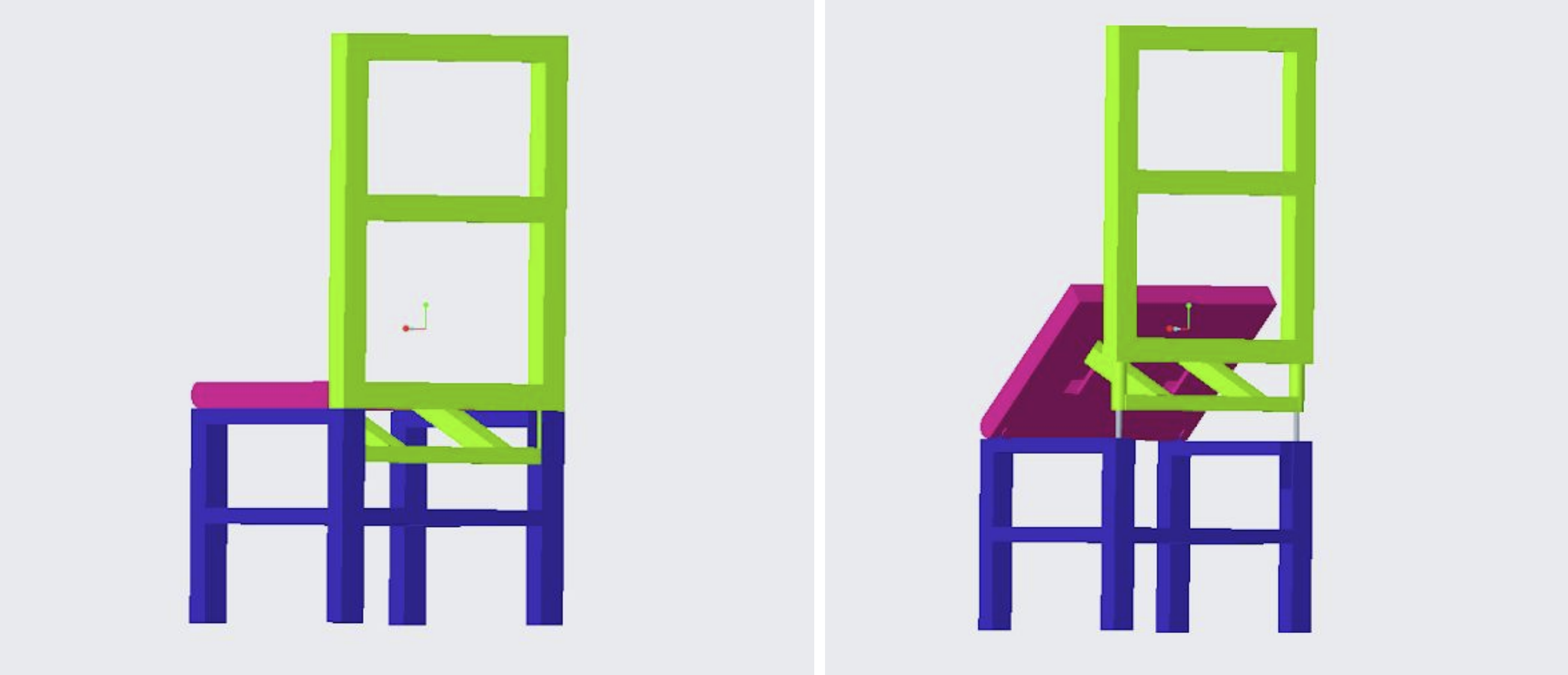
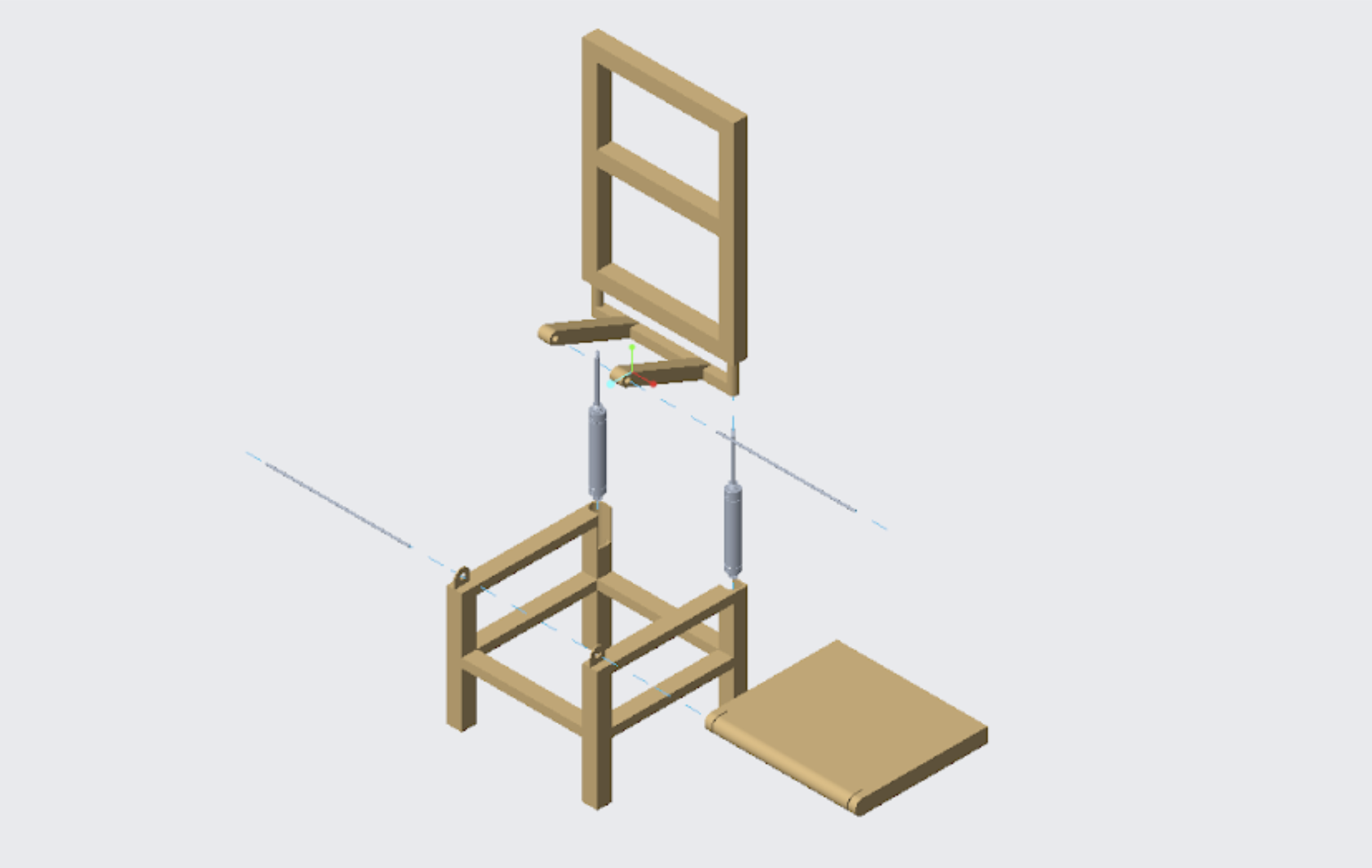
- Creo Parametric was used to fully model a 3D CAD assembly of a chair capable of lifting a user from the seated to standing position.
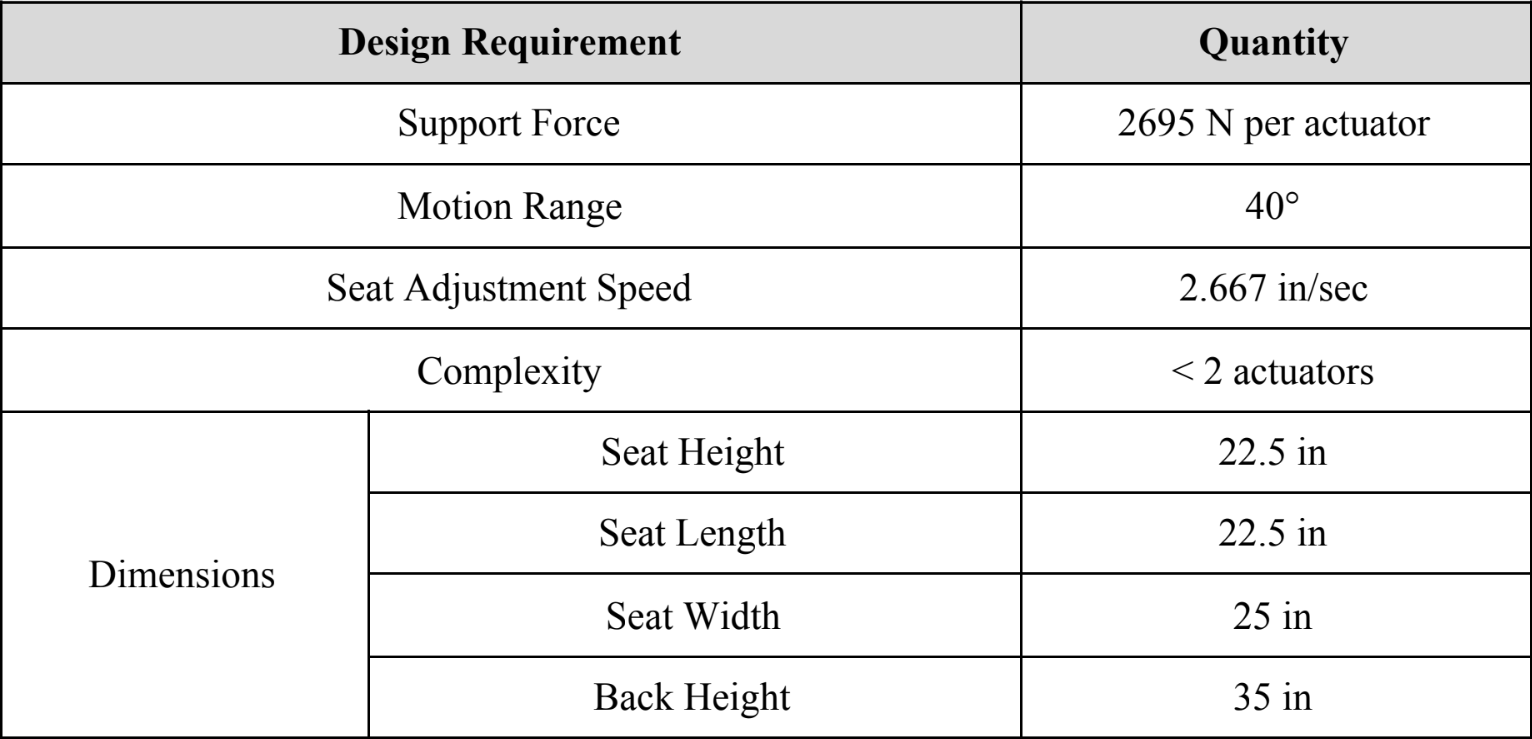
- The StandAid chair was theoretically powered by two pneumatic linear actuators and could easily support and lift a maximum body weight of 100 kg with a safety factor of 5 (2695 N of force per actuator).
- The StandAid also lifts the user up to a 40-degree incline in under 3 seconds.
Video
Team
Andy Du, Vanderbilt School of Engineering, Mechanical Engineering
Lauren Chang, Vanderbilt School of Engineering, Mechanical Engineering