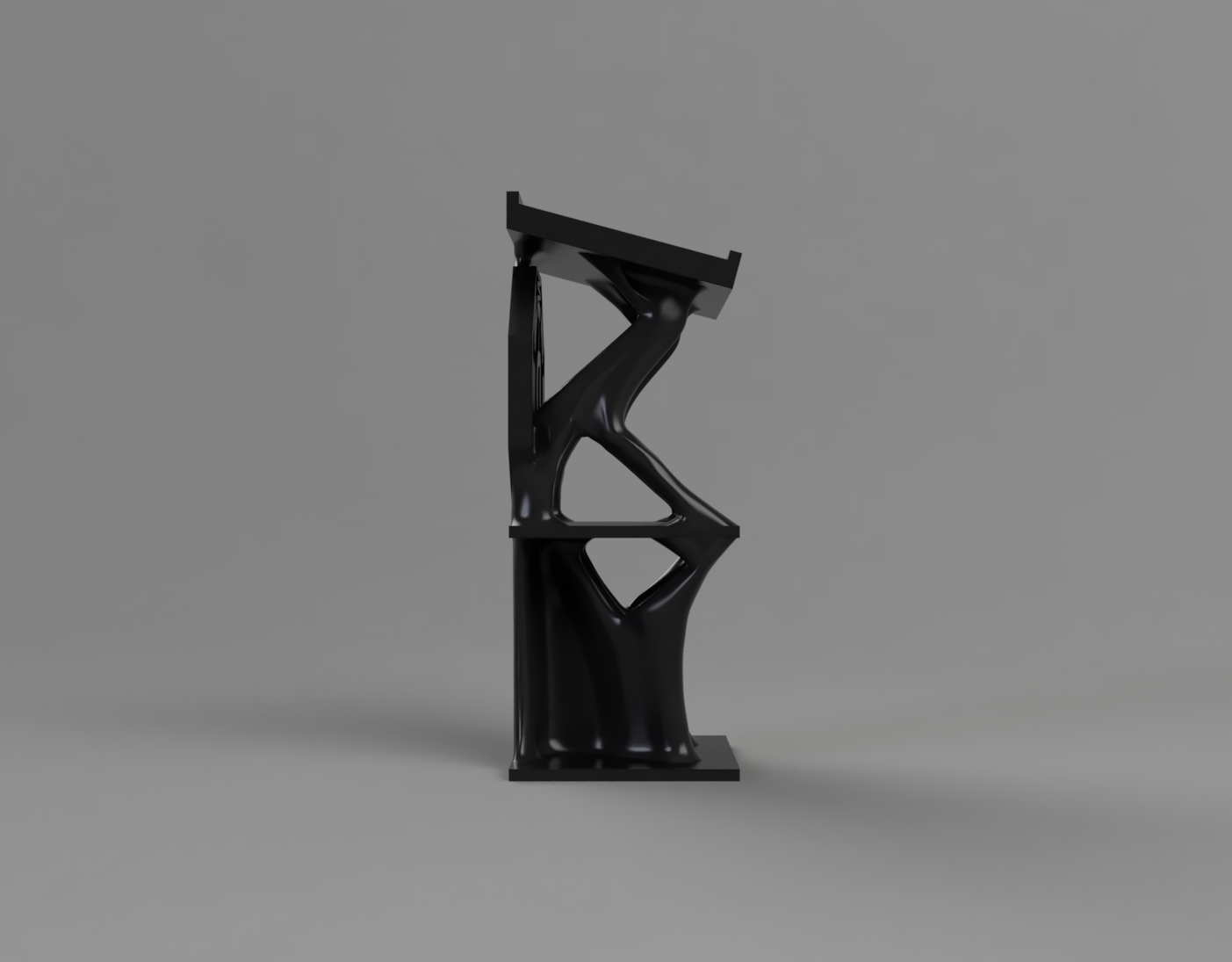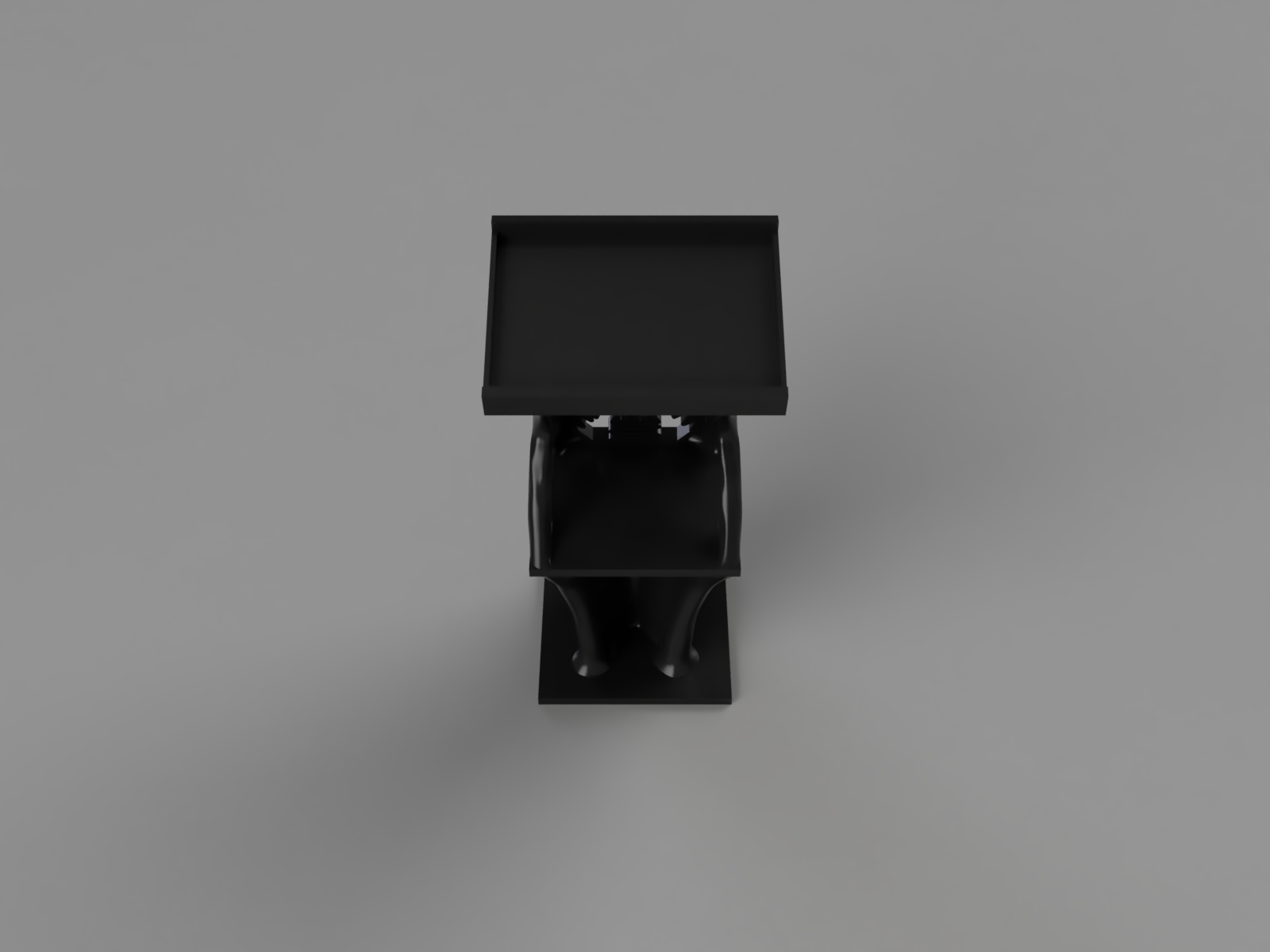
Generatively Designed Podium
Research and Discussion
Introduction
Large Format 3D Printing (LF3DP)
Large format 3D printing (LF3DP) refers to the 3D printing of objects that exceed the size limitations of traditional desktop 3D printers. These printers are capable of generating parts that are several feet in length, width, and height, allowing them to print things like store displays, furniture, signage, set pieces, art exhibits, and more. For industrial manufacturing, LF3DP can be a cost-effective alternative to machining since it gives users the ability to produce complex geometries that would typically require multiple parts and/or assembly. LF3DP can be ideal for printing molds, tooling, patterns, and even end-use parts. These 3D printed parts are often cheaper than similar parts made with traditional manufacturing methods and also often provide shorter lead times than ordering parts.
LF3DP is commonly used in the aerospace, architecture, and automotive industries, as well as many more manufacturing fields. For example, the first LF3DPs originated at the Oak Ridge National Labs research facility with the Big Area Additive Machine (BAAM), the first version of which launched in 2014. Notably, this device was used to 3D print an entire car in 2017 and is most commonly used to create large molds for objects like airplane wings, automotives, and buildings. These molds would traditionally take months to fabricate with giant wood molds, while BAAM allowed for a mold to be printed in days. The latest version of BAAM is capable of depositing 36 kg/hr of material and has a print area of up to 13 ft long, 6.5 ft wide, and 8 ft tall. ORNL has also incorporated two hoppers into the extruder in BAAM, enable multimaterial printing. While not all LF3DP solutions are as advanced as BAAM, the benefits they can offer are comparable.
Generative Design
Generative design (GD) is a design exploration process where various algorithms and artificial intelligence (AI) are used to create various design options based on performance requirements and parameters defined by the user. Through an iterative process, the software is able to evaluate all possible permutations of a given design setup and provide the most ideal solution based on the user parameters. Thus, the main goal of generative design is to create the most efficient and effective solution based on the requirements and constraints set by the user. This allows for many parts to be light-weighted, with the generative design process removing unnecessary material while maintaining components that are critical for structural integrity, a key benefit of generative design. Additionally, single parts can be created using generative design that replace complex assemblies consisting of many parts.
While generative design can provide extremely significant optimization of parts, there are some potential drawbacks. Since the target constraints and parameters are determined by the user, incorrect application of loads and boundary conditions can lead to results being generated that don’t accurately reflect the necessary environmental conditions that the part in question must withstand. Additionally, it can be extremely computationally intensive to evaluate all the iterations and possibilities for models.
A key drawback of generative design that can be addressed by LF3DP is the fact that AI-generated parts are often composed from strange, organic-shaped form bodies that are impossible to create through traditional manufacturing techniques. 3D printing, for the most part, allows for any geometry to be fabricated, and this capability can be leveraged to enable production of many generative design models. With LF3DP in particular, optimized large models can be printed while still optimizing the amount of material needed.
Planetary-Surface Construction
Infrastructure on Moon and Mars
A potential application of LF3DP and GD is 3D printing habitats for deep space exploration, such as for the surface of the Moon or Mars. A key issue with establishing a permanent crewed presence on the Moon or Mars is the ability to bring cargo to the planetary surface and the limitations on mass due to cost. Depending on launch vehicle, the cost to launch a kilogram of cargo to low earth orbit (LEO) is estimated to be around $10,000/kg. Even with SpaceX’s recent advances with their reusable rockets, the estimated cargo cost for a Falcon 9 is still around $2,500/kg. Considering these cost estimates are only for LEO, the costs of launching cargo to the Moon or Mars will be even higher. These constrains make it impractical to launch large, pre-fabricated habitats to another planetary surface, as the costs to send the construction materials needed to build a significant moon or Mars base would be “astronomical” (pun intended). Any habitat that is included with launch would also be limited in size and volume, which places further limitations on astronauts living in these habitats.
Solution
A proposed solution to this problem has been to use LF3DP to additively manufacture habitats directly on the lunar or Martian surface using a lunar or Martian regolith-based filament. The use of “locally sourced” materials means that less material has to be transported from Earth, minimizing costs. This also allows for more design flexibility with larger structures and more unique geometries. In addition to habitats, LF3DP with in situ materials can also be used to develop other infrastructure necessary for a human settlement. Launch pads, landing strips, roads, and more can all be developed with 3D printing.
The importance of mass reduction is a key area where the intersection of LF3DP and generative design can be leveraged for planetary surface construction. Since it is likely that the material used to print on planetary surfaces would likely be a combination of locally sourced and Earth-based materials, it is still critical to minimze the amount of material used to decrease the amount of cargo transported from Earth. Generative design could be use to optimize the designs of any lunar or Martian structures to minimize the mass required while still maintaining structural integrity against any loads presented by the environment, such as astronauts living in a habitat or the internal air pressure that results from the Earth-like atmosphere inside a habitat being higher pressure than the lunar or Martian atmosphere.
Innovations
Challenges
Several challenges still must be addressed before LF3DP on planetary surfaces becomes feasible. Further development needs to be made on the material composition of the deposition material so that it can be composed of all or nearly all locally sourced materials directly from the planetary surface. Companies like ICON are currently working towards this goal with their Olympus 3D printer, specifically designed to print on the moon and Mars. This printer uses a laser-based system to transform lunar dust into printing material. There are also challenges with deposition 3D printing in a low gravity environment. Traditional FFF printing on Earth relies somewhat on gravity to help with layer adhesion, so adjustments may need to be made when printing in a microgravity environment. In addition to layer adhesion being important for structural integrity, in space any structural habitat printed with LF3DP must also be airtight and able to maintain its own internal atmosphere for humans to live in. Any gaps or microcracks in the structure could be lead to devastating results.
Other Applications
In addition to building infrastructure on planetary surfaces, LF3DP and generative design can also be used for building more complex structures, including rockets. Relativity Space is a start-up company that is working towards developing the technology necessary to 3D print an entire reusable rocket. Using the world’s largest metal 3D printers, they have recently launched their Terran 1 rocket, of which over 80% is 3D printed, and are in the process of creating the Terran R rocket that will also consist of mostly 3D printed custom parts. Their eventual goal is to create a rocket consisting of entirely 3D printed parts. These rockets include many nature-inspired designs that leverage the capabilities of LF3DP and generative design to completely change what a rocket can look like, with things like dragonfly-inspired drag fins and seashell-styled tank bases.
If companies like Relativity Space are able to continue developing their 3D printing capabilities, it is possible that one day there could be a rocket 3D printing factory on Mars. This would enable rockets to be made directly on the Martian surface using materials found there, which could provide astronauts with a return vehicle. Otherwise, there would be many challenges with a single spacecraft getting astronauts to and from Mars. Currently, most spacecraft are launched in a multi-stage launch vehicle, with the first stage being expended primarily to get the spacecraft out of Earth’s gravity. The smaller second stage can then travel to its final destination, whether it be the moon or Mars. If a spacecraft then wanted to return from Mars to Earth, it is likely that a separate return launch vehicle would be needed on the Martian surface. The ability to LF3DP a rocket directly on a planetary surface would be a significant milestone for humanity’s quest to explore the cosmos.
References
- https://xponentialworks.com/what-is-large-format-3d-printing-and-who-needs-it/
- https://all3dp.com/1/large-format-3d-printer-large-scale/
- https://all3dp.com/1/large-scale-3d-printing-the-ultimate-guide/
- https://www.engineering.com/story/how-big-area-additive-manufacturing-is-enabling-automotive-microfactories
- https://www.autodesk.com/solutions/generative-design
- https://aerospace.csis.org/data/space-launch-to-low-earth-orbit-how-much-does-it-cost/
- https://www.nasa.gov/centers/marshall/news/releases/2020/nasa-looks-to-advance-3d-printing-construction-systems-for-the-moon.html
- https://www.cnet.com/pictures/this-3d-printed-mars-habitat-could-be-your-new-home-in-space-marsha-ai-spacefactory/10/
- https://www.relativityspace.com/home
- https://spectrum.ieee.org/3d-printed-rocket-relativity-spacex
- https://www.freethink.com/space/building-on-the-moon#:~:text=NASA%20has%20awarded%20high%2Dtech,on%20the%20moon%20and%20Mars
Generative Design Setup
Design
-
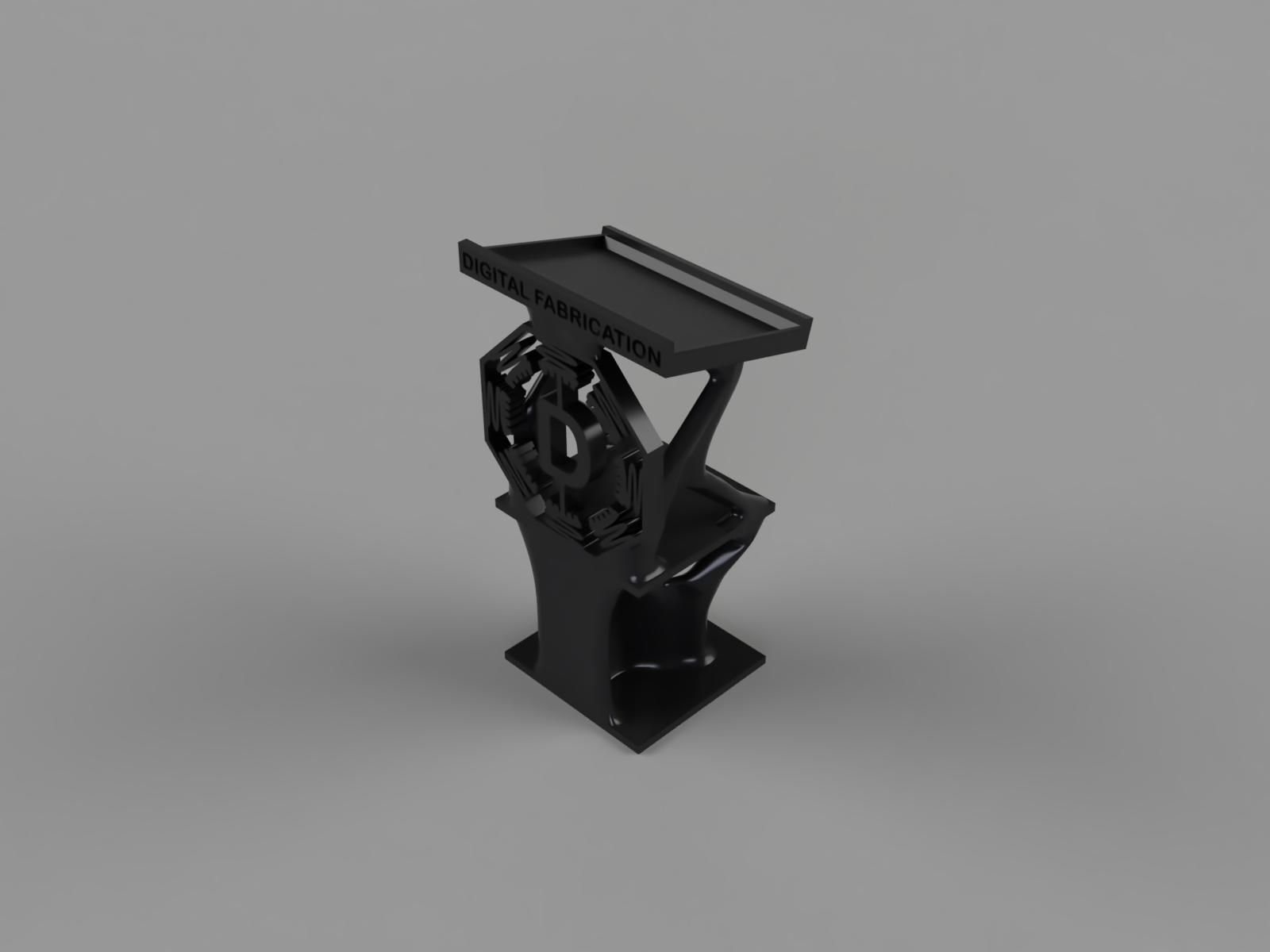
The podium design includes a top, shelf, and base with the Dr. D Flo logo placed on the front face
-
“DIGITAL FABRICATION” is also placed on the top lip
-
To ensure printability, the text size was maximized to ensure that no features were smaller than 9 mm in width
-
Height: 48”
-
Top surface: 25” x 16”, angled at 15 degrees
Preserve Geometry
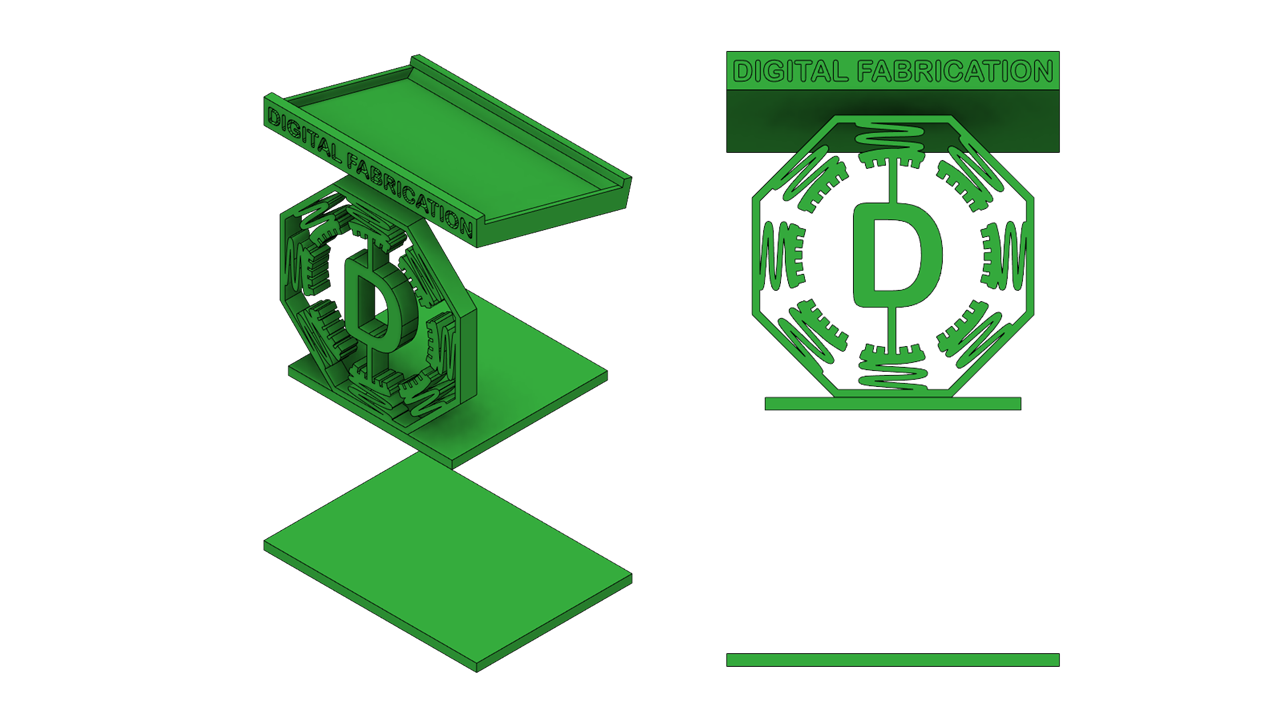 Preserved geometry for the generative study.
-
To setup the generative design for the podium, several areas were designated as preserved geometry
- These are bodies that are incorporated into the final design shape but are not manipulated
-
For the podium, this included the top, shelf, base, and logo
Obstacle Geometry
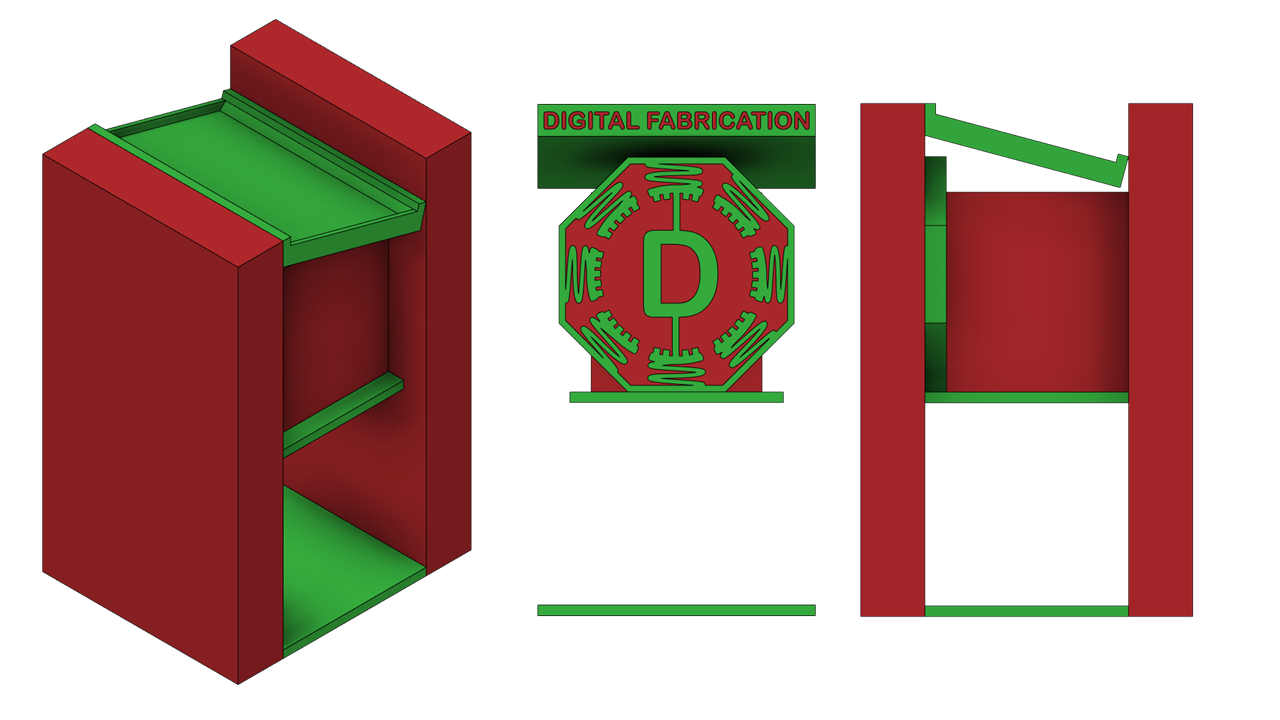 Obstacle geometry for the generative study.
-
Additionally, several areas were designated as obstacles where no material should be placed in the general design
-
“Empty space” in the final generated design
-
The space above the shelf was made into an obstacle to ensure that there would be space to place items on the shelf
-
An obstacle was placed over the entire front side of the podium to ensure that it was a flat surface that could be printed directly onto the build plate
-
Another obstacle was located on the back side of the podium to ensure that no material blocked the entrance of the shelf and that users could still access it
Loads and Constraints
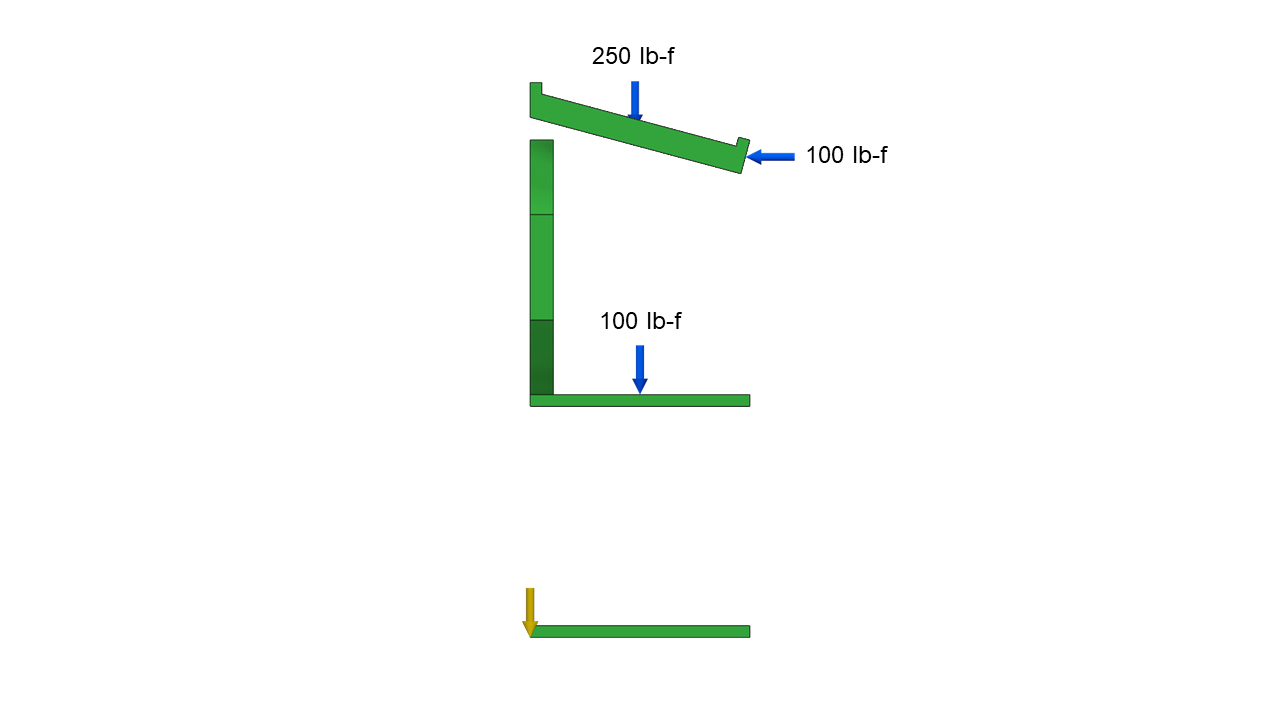 Load cases applied to the podium.
-
A fixed constraint was placed on the bottom side of the podium base where the podium would meet the floor
- This constrained the podium in the x, y, and z directions from the base
-
Three load cases were considered in the generative design:
| Load Case | Description | Magnitude |
|---|---|---|
| 1 | Vertical normal load on top | 250 lb-force |
| 2 | Vertical normal load on shelf | 100 lb-force |
| 3 | Horizontal shear load on top | 100 lb-force |
Design Criteria
-
The generative design objective was set to “Minimize Mass”
-
Additive manufacturing in the Y+ direction (front face flat on the build plate) was evaluated as well as an unrestricted manufacturing case
-
An overhang angle of 45 degrees and a minimum thickness of 30 mm were considered
-
ABS material was used for the model
Post-Processing and Validation
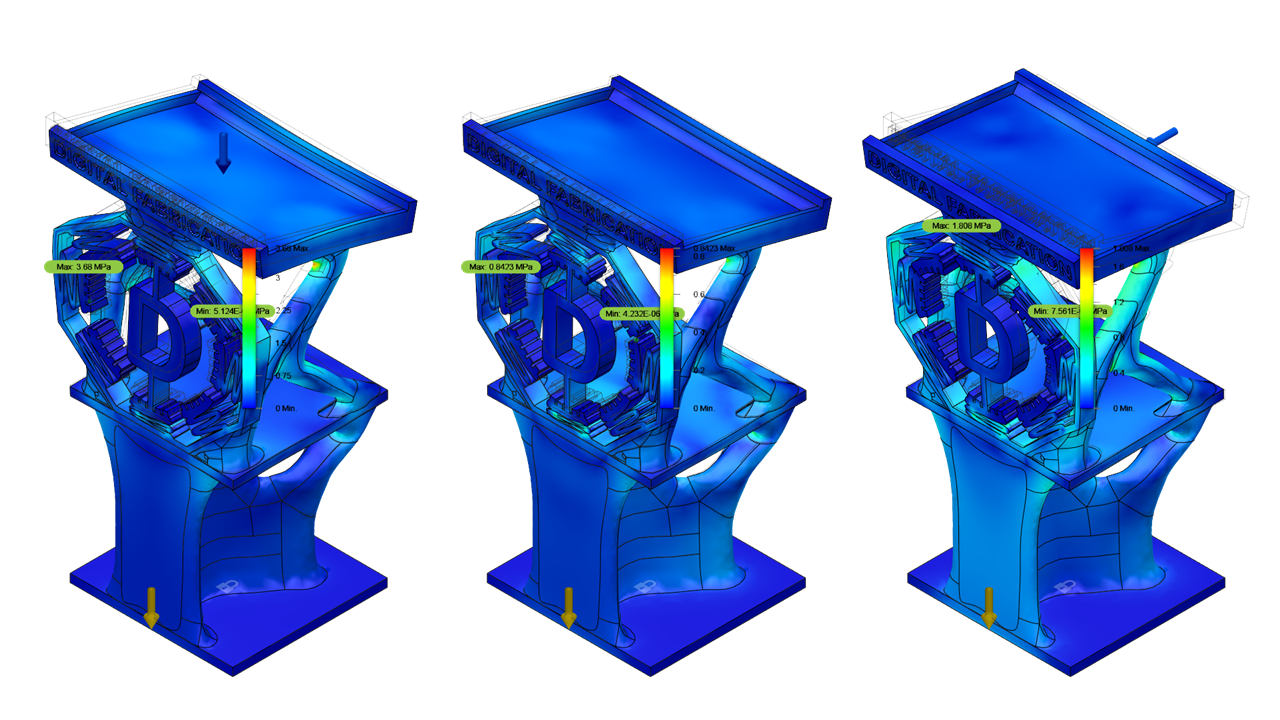
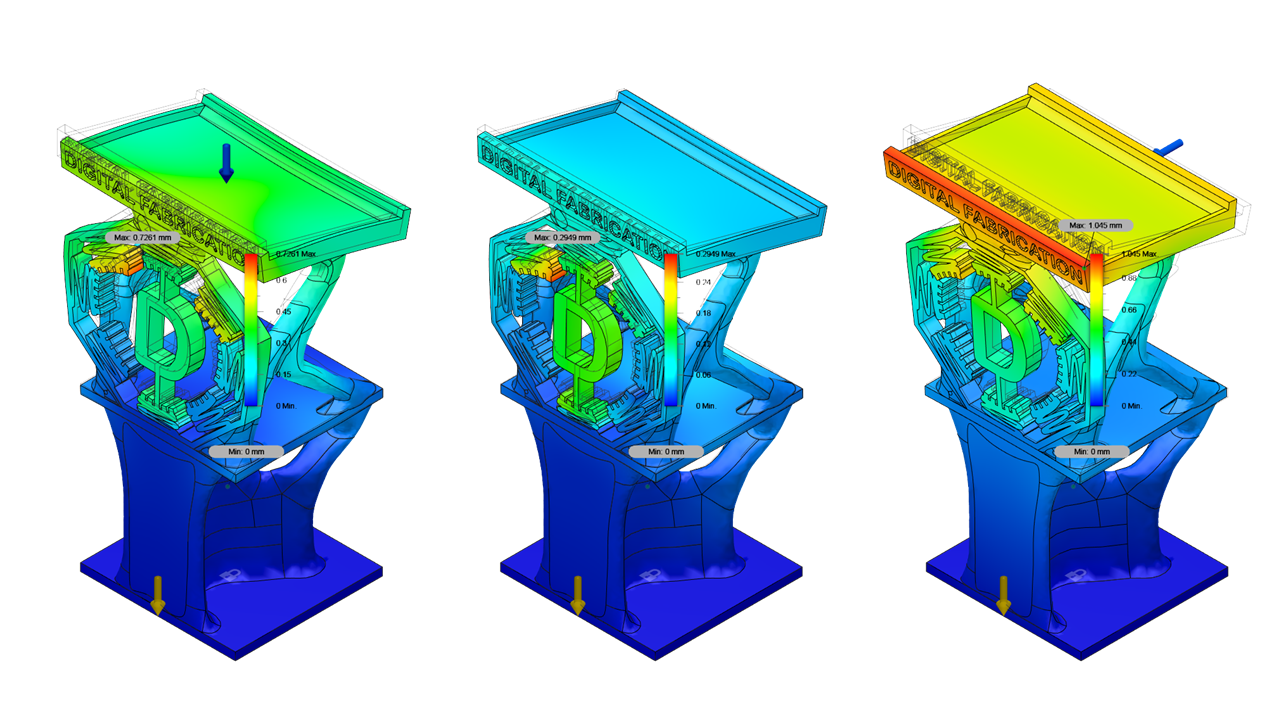 Simulation results for von Mises stress (top) and maximum displacement (bottom) for load cases 1-3.
-
Following the generative design, the design was modified in the Form workspace to ensure that all overhangs were greater than 45 degrees for printability
-
Simulations were performed on the modified design to ensure that the altered bodies did not compromise the structural integrity of the podium
-
It was found that the podium was able to comfortably withstand all the load cases presented, with a minimum safety factor of 5.435
Scale Model
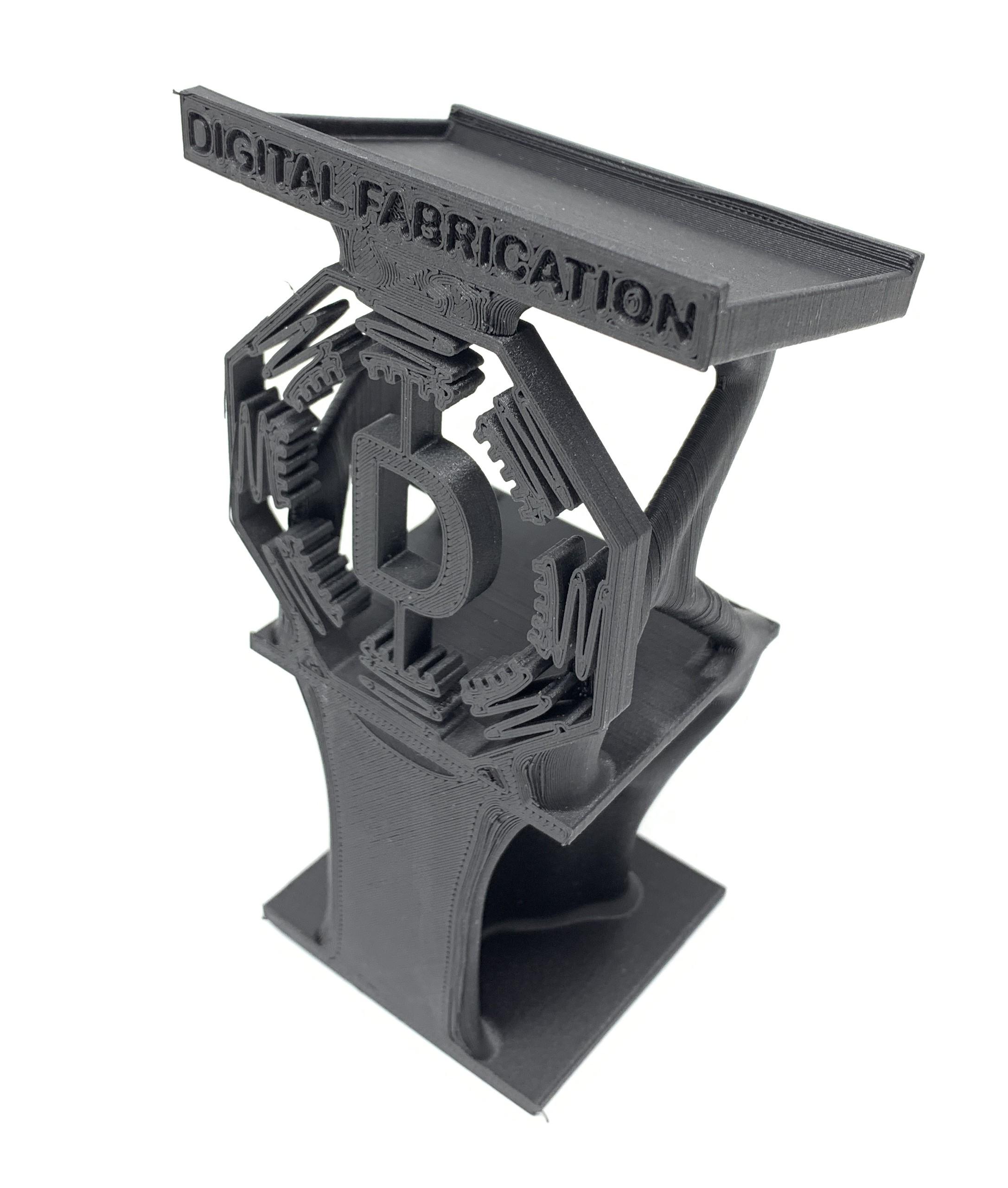
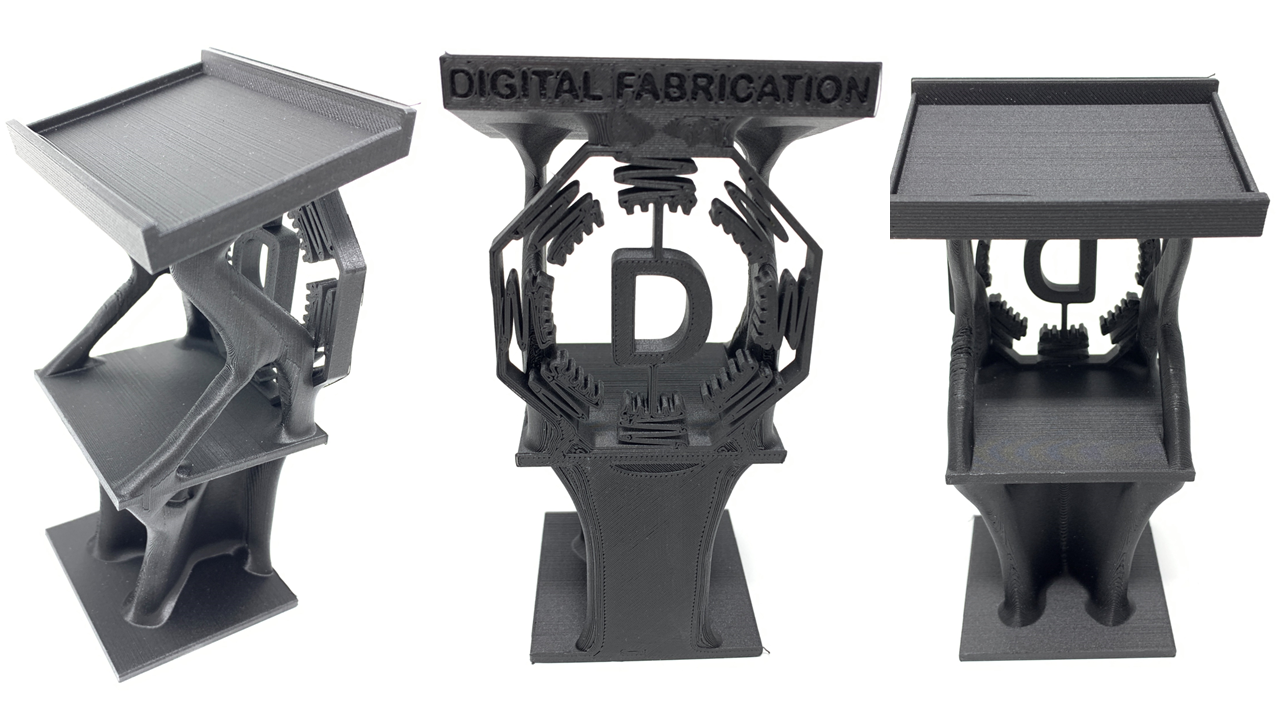
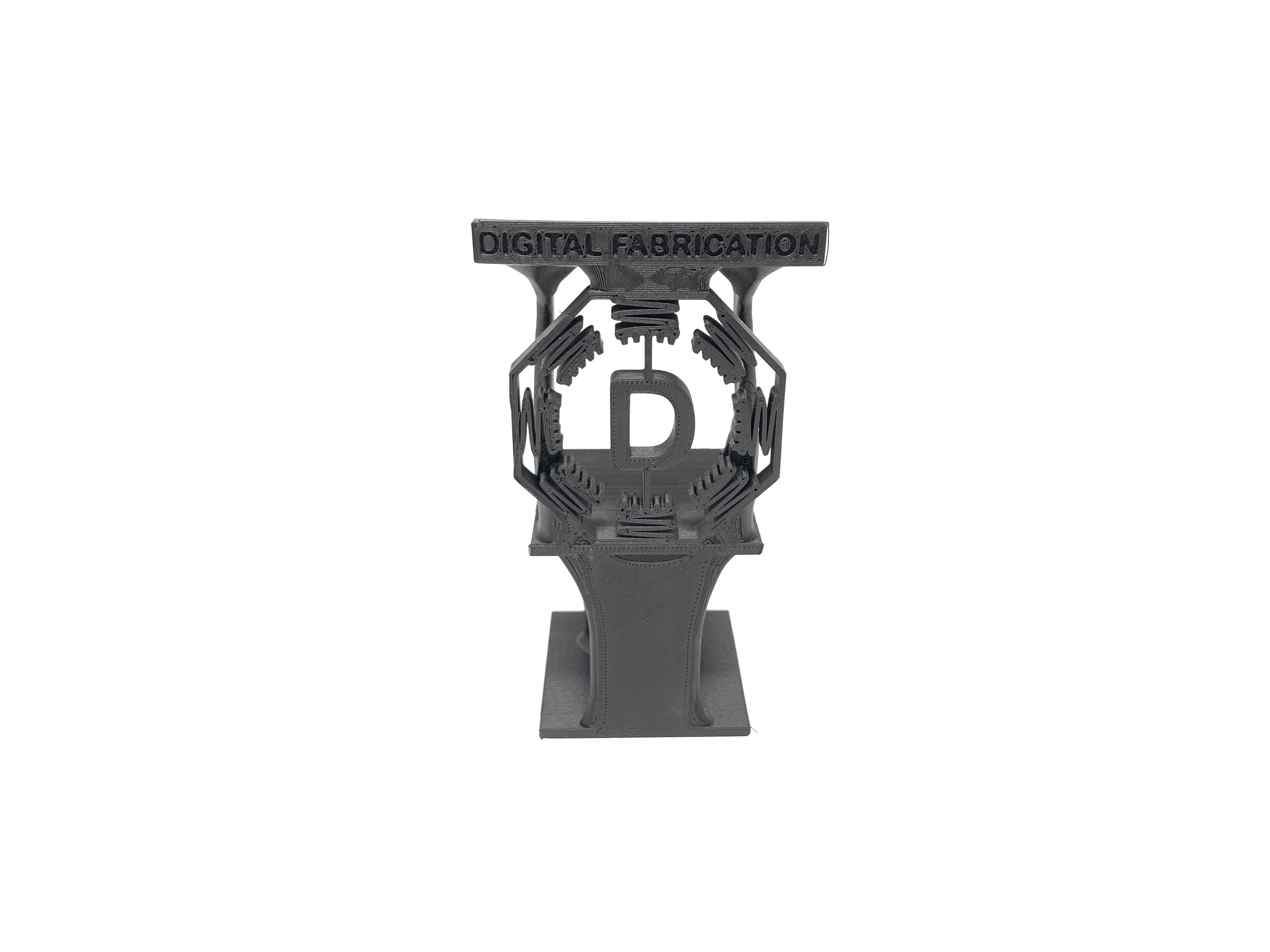
To verify that the generative design model had no overhangs less than 45 degrees and therefore was able to be printed without supports, a scale model was printed using a MakerGear M3-ID printer. To accurately scale the nozzle diameters between the MakerGear (nozzle diameter of 0.35 mm) and the large-format 3D printer (nozzle diameter of 3 mm), the scale model was printed at 11.67% of the actual model size.
CAD Model